
fossilcodes.org
 " alt="GSL Dimorphodon Witton 2017">
The West Dorset and Axmouth to Lyme Regis Undercliffs National Nature Reserve Fossil Collecting Codes
Scientifically important fossil finds along the western stretch of the Jurassic Coast World Heritage Site are recorded by the Charmouth Heritage Coast Centre. They work with both the public and professional collectors to record any key scientific finds. These records are then available for experts and museums to view specimens that may warrant further study.
The area surrounding Charmouth and Lyme Regis is one of the most important sites in the world for Lower Jurassic fossils. New and important discoveries are still being made along this coastline and it is essential that important fossils are collected before they are destroyed by the sea.
Following the fossil collecting codes on this site ensures the sustainable collection of fossils, the protection of this World Heritage Site and the transfer of ownership of fossils found to the finder.
Two fossil collecting codes are in place along the western Jurassic Coast site. The West Dorset Fossil Collecting Code extends from Lyme Regis to Hive Beach at Burton Bradstock. The Undercliffs NNR Fossil Collecting Code extends from Lyme Regis to Axmouth.
West Dorset Fossil Collecting Code of Conduct
Undercliffs NNR Fossil Collecting Code and Recording Scheme- Version 2
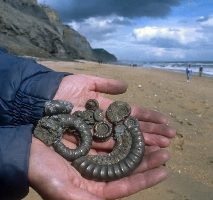
Collectors
Fossils are being uncovered every day on this coastline by the natural processes of erosion.
Collectors are often highly experienced and capable of recovering important specimens shortly after they are exposed, responding quickly to events like winter storms and landslides. Often, they will also prepare (clean) these specimens, which can take hundreds of hours of highly skilled labour.
The time, skill and effort made by collectors in the recovery and preparation of fossil specimens is recognised as an asset to the sustainable management of the coast.
Sustainable Collecting
The West Dorset and Undercliffs fossil collecting codes sit within a wider rationale regarding effective management of fossil sites that is set out by Natural England. In simple terms, fossil sites are managed according to their sensitivity.
Sites such as Charmouth require active collecting effort in order to rescue the fossils as they are exposed by erosion. Other sites, such as a cave deposit or abandoned mine tips, are finite in their reserves and collecting has the potential to damage or even completely destroy them.
Click here for further details of this approach.